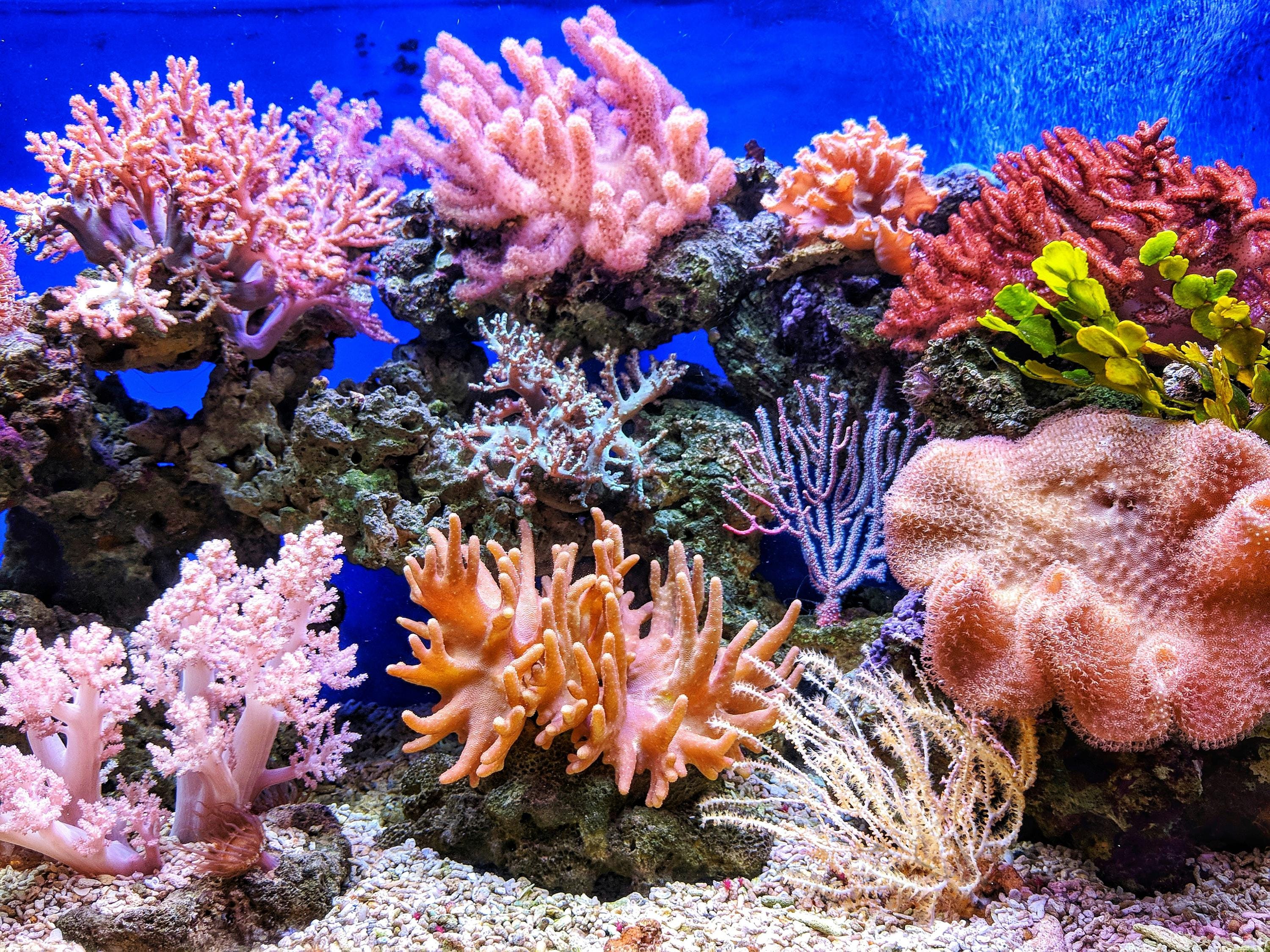
Coral Jasper is one of those materials whose name immediately paints a picture of ancient reefs and underwater worlds. The reality is even more interesting. “Coral Jasper” is primarily a commercial or trade name rather than a single, strictly defined mineralogical variety, and material sold under that label can vary. Some pieces are jasper or chalcedony with coral-like patterns, while others may be silicified or agatized fossil coral displaying the preserved structures of ancient marine organisms. That distinction is part of the stone's charm. A polished piece of Coral Jasper may represent millions of years of geological change, and in some cases, a genuine snapshot of prehistoric marine life transformed into stone.
Geological Composition: Jasper, Chalcedony, or Ancient Coral?
The first thing to understand about Coral Jasper is that the name does not always describe one exact geological material. In the trade, it may refer to a patterned jasper with coral-like designs, but it is also sometimes used for silicified or agatized fossil coral. When the material is truly jasper, it is primarily composed of silicon dioxide (SiO₂) in the form of microcrystalline quartz and chalcedony. Mineral impurities and inclusions, especially iron and manganese compounds, help create its earthy reds, oranges, browns, creams, and darker tones. Jasper is generally opaque and may contain additional mineral phases depending on the deposit. If the material is fossil coral, its story takes a fascinating detour through prehistory. Living stony corals build hard skeletons primarily from calcium carbonate. After burial, silica-rich groundwater can gradually dissolve and replace that original material with chalcedony or other forms of quartz while preserving the original coral structure. The result is a pseudomorph, meaning one material has replaced another while retaining its recognizable form. In some cases, the original cellular structure of the coral remains beautifully visible after millions of years. This is why one piece labeled Coral Jasper may display abstract swirls and earthy patterns, while another looks almost floral, honeycombed, or filled with tiny ancient coral cells. Same trade name, potentially very different geological passports.
Historical Background: A Connection to Ancient Seas
Although Coral Jasper itself does not have a long, clearly documented history under that exact name, both jasper and coral have been valued by humans for centuries. Jasper has been carved and polished for ornamental and decorative purposes throughout history, while natural coral has held cultural significance as jewelry, ornamentation, and symbolic material in many societies. Fossil coral adds yet another chapter to that story because it represents life that once existed in ancient oceans and was eventually incorporated into the geological record. One of the best-known examples is agatized coral from Florida, which was officially designated the Florida State Stone in 1979. The material is associated with several Florida localities, including the Tampa Bay area, the Econfina River, and the Withlacoochee and Suwannee river regions. Some Florida specimens originated from coral colonies that lived tens of millions of years ago. There is something wonderfully time-bending about holding fossilized coral. What may look like a decorative pattern on a polished stone can actually be the preserved architecture of an organism that lived when the landscape around it was covered by ancient seas.
Metaphysical Themes: Grounding, Ancient Wisdom & Natural Connection
In modern crystal traditions, Coral Jasper is often associated with grounding, stability, nurturing energy, and connection with the natural world. Its earthy colors and ocean-inspired patterns give it a symbolic bridge between land and sea, the physical world and the immense passage of time. It is commonly chosen for intentions involving emotional steadiness, patience, resilience, and rebuilding after periods of change. Rather than carrying the symbolism of dramatic transformation, Coral Jasper is often viewed as a stone of gradual growth. Its message is less lightning bolt and more geological pressure: meaningful things sometimes take their sweet, stubborn time. When a specimen contains genuine fossil coral, it may also be associated symbolically with ancestral wisdom, memory, endurance, and the cycles of life. The preserved structures can serve as a beautiful reminder that even long-past stages of existence leave something behind. Coral Jasper is most often connected with the Root Chakra because of its grounding and stabilizing associations. Red, rust, and orange-toned material may also be associated with the Sacral Chakra, where modern metaphysical traditions connect color with creativity, vitality, emotional movement, and personal connection. These metaphysical associations are spiritual and symbolic beliefs and are not scientifically established medical properties.
Astrological Ties
Coral Jasper does not have one universally accepted zodiac assignment, but its symbolic qualities make it an appealing match for several signs. Taurus is a natural fit because of the material's associations with grounding, patience, stability, and connection to the physical world. Its earthy appearance also suits Taurus's traditional connection with nature and sensory appreciation. Cancer may resonate with Coral Jasper through its oceanic imagery and associations with nurturing, emotional security, memory, and home. Virgo can connect with the stone's symbolism of practical growth, patience, and steady restoration. Coral Jasper's layered patterns also offer a fitting reminder that progress does not always arrive in a perfectly straight line. Scorpio may be drawn to genuine fossil-bearing material because of its connection with transformation, ancient history, endings, and renewal. A living organism becoming stone over geological time is, frankly, a very Scorpio plot twist. As with many crystal-zodiac associations, these connections are modern metaphysical interpretations rather than fixed historical rules.
Origin & Notable Localities
Because Coral Jasper is a broad commercial name, the origin of any individual piece depends heavily on what the material actually is. Florida, United States, is one of the most historically significant sources of agatized fossil coral. Silica gradually replaced ancient coral skeletons, creating chalcedony pseudomorphs that preserved the original coral forms. Florida's agatized coral is sufficiently important to the state's geological identity that it became the official state stone. Other agatized coral occurrences have been documented elsewhere, including parts of the United States, Scotland, Poland, and glacial deposits of the American Midwest containing material transported from older fossil-bearing regions. Meanwhile, patterned jasper marketed under names such as Coral Jasper may come from a variety of international lapidary sources. Because trade names are not standardized mineralogical classifications.
Authenticity Guidance: What Are You Actually Buying?
This is where Coral Jasper becomes especially interesting for collectors. The most important authenticity question is not necessarily, “Is this real Coral Jasper?” but rather, “What exactly does this name mean for this particular piece?” A genuine fossil coral specimen may show repeating cellular structures, flower-like patterns, corallites, or other organized features reflecting the original coral colony. These patterns often appear more structured than the random swirls and spots found in ordinary jasper. A patterned jasper marketed as Coral Jasper may be completely natural and beautiful while having no actual biological connection to coral. Its name may simply describe its appearance. Neither material is inherently "better." The important thing is accurate labeling. Be cautious with pieces showing extremely unnatural or intensely uniform colors, particularly if pigment appears concentrated in fractures, pores, or drill holes. This may indicate dye treatment. Natural material can certainly display vivid patterns, but its coloration usually shows more organic variation. Also remember that a polished stone alone is not always enough for positive identification. If authenticity, fossil content, or the exact geological composition of a piece is important to you, it is always worth asking the seller what they know about its composition, treatments, and origin. Even reputable sellers may not always have access to complete sourcing information, especially when material has passed through multiple suppliers or is sold under a broad trade name. What matters is a willingness to share the information they do have and to be transparent about what remains uncertain. And sometimes, the mystery is perfectly okay, too. If you find a piece beautiful, fascinating, and simply feel drawn to it, you do not need a complete geological biography to appreciate it. After all, part of the joy of collecting stones is that sometimes a piece catches your eye first, and the rest of its story unfolds later.
Care & Handling
Care should be based on the actual composition of your piece. Most quartz-rich jasper and agatized or silicified coral have a hardness of approximately 6.5 to 7 on the Mohs scale, making them reasonably durable for jewelry, carvings, and decorative pieces. For routine cleaning, use a soft cloth and, when needed, a small amount of mild soap with lukewarm water. Rinse gently and dry thoroughly. Avoid bleach, harsh household cleaners, and prolonged exposure to chemicals. Because natural material may contain fractures, porous areas, or structural variations, ultrasonic cleaning is best avoided unless the exact composition and condition of the piece are known. While quartz-based material is relatively durable, it can still chip when dropped or struck against a hard surface. Store Coral Jasper jewelry separately when possible, particularly alongside softer gemstones. This helps prevent accidental scratching and keeps polished surfaces looking their best. For those who enjoy metaphysical cleansing practices, gentle options such as moonlight, sound, smoke, or intention-setting are commonly used. Since the trade name can cover materials with different compositions, these gentler approaches remove the guesswork.
Final Thoughts
Coral Jasper is a beautiful example of why the crystal world becomes even more fascinating when we look beyond the label. A piece sold under this name may be a richly patterned jasper inspired by the appearance of coral. Another may contain the mineralized remains of an ancient coral colony. One is a story written by mineral impurities and silica. The other may literally preserve a chapter of prehistoric ocean life. Both can be extraordinary. For collectors, the magic is in asking questions. Learn the composition. Ask about the origin. Look closely at the patterns. And whenever possible, celebrate the stone for what it truly is, rather than only for the name attached to it. Coral Jasper reminds us that nature is an exceptional artist, and occasionally its studio takes a few million years to finish a piece. 🪸🌊