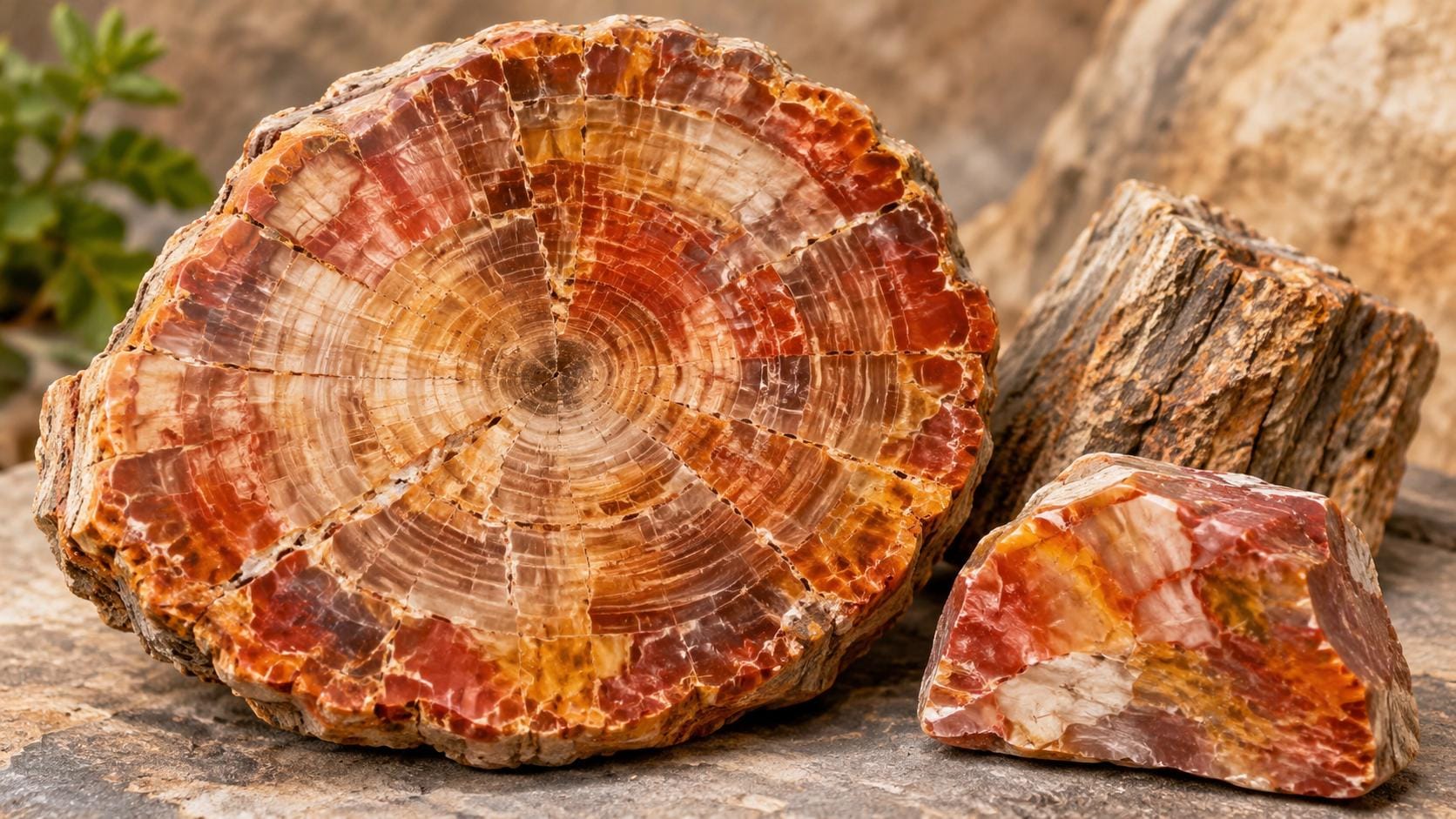
Imagine picking up a piece of wood that once belonged to a living tree millions of years ago. It still displays rings, grain, and sometimes even the texture of its bark, but it feels like solid stone. Welcome to the wonderful world of petrified wood, where an ancient forest gets a remarkable second life.
Petrified wood is one of nature's most fascinating examples of fossil preservation. It captures details of long-vanished trees while showcasing the colors and textures of minerals deposited over immense stretches of geological time.
How Does Wood Turn to Stone?
Petrified wood begins with an ordinary tree. After the tree dies or falls, it must become buried under the right conditions for fossilization to occur. Sediment, volcanic ash, or other deposits can cover the wood and help protect it from the usual processes of decay.
As groundwater moves through the buried material, it can carry dissolved minerals into the wood's tiny pores and spaces. Silica, the same basic chemical compound found in quartz, is especially important in many famous petrified wood deposits. It may come from weathering rocks or volcanic ash and can gradually accumulate within the wood.
Two processes are involved in much petrified wood preservation: permineralization and replacement. Permineralization happens when minerals fill the pores and open spaces within the original tissue. Replacement occurs as organic material breaks down and mineral matter occupies the spaces it leaves behind. These processes can happen together rather than as two neat, separate steps. Scientists have found that the exact process varies between specimens and geological settings.
The result? A fossil that can retain the recognizable structure of wood long after the original tree's organic components have largely disappeared.
Why Is Petrified Wood So Colorful?
One of the delights of collecting petrified wood is its incredible range of colors. Specimens may display warm reds, golden yellows, rusty oranges, creamy whites, browns, grays, and even darker shades.
Much of this color comes from trace minerals and other impurities introduced during fossilization. Iron oxides, for example, can produce red, orange, yellow, and brown tones. Manganese and other mineral components may contribute darker coloration. The surrounding geological chemistry helps determine which colors develop, so two pieces from the same general deposit can look quite different.
Some silicified wood contains chalcedony, agate, jasper, or quartz. These are all forms of silica, but they differ in structure and appearance. Fine-grained jasper can create opaque, richly colored areas, while chalcedony may produce smoother, waxier-looking sections. In some specimens, tiny quartz crystals even grow within cavities or fractures.
Nature apparently decided that preserving the tree wasn't enough. It had to decorate the evidence, too.
What Can Petrified Wood Tell Us About Ancient Forests?
Petrified wood is more than a pretty collectible. It provides scientists with clues about ancient plant life, environments, and geological events.
Growth rings, wood grain, bark patterns, and microscopic cellular structures may survive fossilization. These features can help researchers study ancient trees and compare them with other fossil plants.
A famous example comes from Arizona's Petrified Forest National Park. Much of its petrified wood occurs in the Chinle Formation, which contains rocks deposited during the Late Triassic Period. One remarkable specimen described by the Australian Museum dates to approximately 225 million years ago. Its original forest was buried by volcanic ash, and silica-rich groundwater helped preserve the wood's structure.
That's an extraordinary amount of history packed into something that can fit in the palm of your hand.
How to Recognize Genuine Petrified Wood
The best clue is preserved wood anatomy. Look for recognizable growth rings, grain running along the length of a piece, bark-like texture, or fine repeating structures that resemble the cellular pattern of wood.
However, colorful jasper, agate, and other banded rocks can sometimes resemble petrified wood. A pretty pattern alone does not confirm that a specimen is fossilized timber. Identification may require a closer examination of its structure, and microscopic analysis can reveal details that aren't visible to the unaided eye.
Avoid relying on destructive scratch tests or acid tests, especially on polished or valuable pieces. When a specimen's identity or origin matters, trustworthy provenance and expert identification are much better tools.
Caring for Your Petrified Wood
Silicified petrified wood is often quite hard, but that doesn't make it indestructible. It can still chip or fracture if dropped, particularly around thin edges and natural cracks.
Keep specimens away from hard impacts and store them where they won't rub against other minerals. For routine dusting, use a soft, dry cloth or brush. If a piece has a rough matrix, delicate surface, repair, or unknown treatment, check its specific care requirements before using water or cleaning products.
Some modern crystal traditions associate petrified wood with grounding, patience, stability, and a connection to nature. These are symbolic and metaphysical beliefs rather than scientifically demonstrated effects, and interpretations vary among traditions and individuals.
Whether you appreciate petrified wood for its geological history, its natural patterns, or the symbolism it carries, each specimen offers a little window into an ancient world. Explore the mineral and fossil-inspired pieces at Craven Crystals, and keep discovering the remarkable stories hidden inside Earth's treasures.