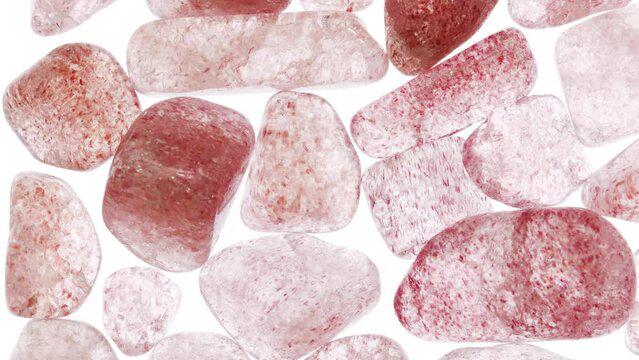
Softly sparkling and irresistibly romantic in tone, Strawberry Quartz is a name that captures attention instantly. But here’s something many collectors don’t realize — “Strawberry Quartz” is not a single mineral species. It’s a trade name used for several varieties of quartz that contain colorful inclusions, giving them that signature seeded, glittery appearance.
From red to green, blue, golden, and even black variations, each version has its own geological story, locality sources, energetic symbolism, and market considerations. Let’s explore what these stones actually are — and how to tell the genuine from the dyed or mislabeled.
What Is Strawberry Quartz, Really?
All varieties are based in quartz (SiO₂). What makes them “strawberry” is the presence of tiny mineral inclusions trapped inside the quartz as it formed. These inclusions create speckles, shimmer, or internal flashes that resemble strawberry seeds suspended in glass. Depending on the type and concentration of inclusions, the color shifts — and so does the trade name. All types share a quartz (SiO₂) base. The color and sparkle come from inclusions such as:
- Hematite
- Lepidocrocite
- Goethite
- Chlorite
- Dumortierite
- Iron oxides
These inclusions create internal speckling rather than surface glitter.
Red Strawberry Quartz
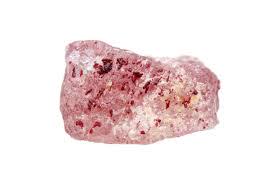
True red strawberry quartz contains fine inclusions of hematite or lepidocrocite (iron oxide minerals). These microscopic platelets create a soft red to pink sparkle within translucent quartz. However, many stones sold as strawberry quartz are actually red aventurine — an opaque quartz with hematite inclusions that produce a more uniform body color and less internal translucency.
Origin
- Kazakhstan – Frequently cited for classic red inclusion-rich material.
- Brazil – Produces warm-toned translucent quartz with iron inclusions.
- Russia – Occasional iron-rich quartz deposits.
Kazakh material is often highly inclusion-dense and richly colored, while Brazilian material may appear slightly softer in tone.
Energetic Themes
Red strawberry quartz is often associated with:
- Joyful love
- Emotional vitality
- Confidence rooted in the heart
- Passion balanced with stability
Astrologically, it resonates beautifully with Taurus (sensual and heart-centered), Libra (romantic harmony), and even Aries when emotional softness is needed.
Green Strawberry Quartz
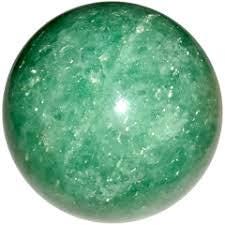
Green versions typically contain chlorite, actinolite, or other iron-bearing inclusions. In many cases, this material is simply green aventurine (fuchsite-bearing quartz) being marketed under the strawberry quartz name.
Energetic Themes
- Growth and renewal
- Emotional resilience
- Prosperity mindset
- Nature connection
Astrologically aligned with Virgo (healing and refinement), Capricorn (steady growth), and Cancer (nurturing protection).
Blue Strawberry Quartz
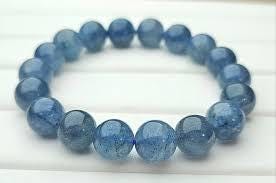
Blue varieties may contain inclusions of dumortierite, fibrous mineral inclusions, or iron-related compounds. Some blue material in the market has been heat-treated or dyed, so transparency from sellers is essential.
Energetic Themes
- Calm communication
- Mental clarity
- Emotional expression
- Spiritual awareness
Often linked with Gemini (communication), Aquarius (higher thought), and Pisces (emotional flow with boundaries).
Black Strawberry Quartz
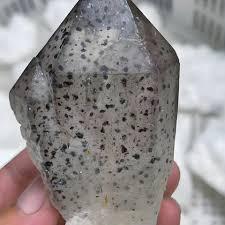
This darker variation typically contains heavier concentrations of hematite or goethite, giving the quartz a deep gray to blackened appearance with occasional reddish sparkles.
Energetic Themes
- Protection rooted in emotional wisdom
- Transformation
- Grounded strength
- Stability through change
Strongly resonant with Scorpio (transformation), Capricorn (endurance), and Taurus (earthy protection).
Golden Strawberry Quartz
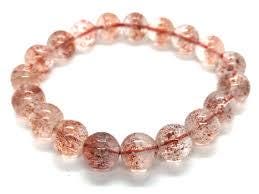
This variation is typically quartz that contains iron-oxide inclusions (like hematite or goethite) that lean more golden, coppery, or honey-toned rather than red. In many cases, golden strawberry quartz sits somewhere between classic red strawberry quartz and Golden Healer quartz. The main difference is Golden Strawberry Quartz usually has speckled or seed-like inclusions with visible suspended particles and a warmer, sometimes peachy-golden sparkle. If red strawberry quartz is heart-forward, Golden strawberry quartz feels like heart + personal power working together.
Energetic Themes
- Joy with confidence
- Empowered love
- Optimism rooted in reality
- Emotional warmth without overwhelm
Strongly resonant with Leo (confidence), Taurus (stability), and Libra (harmonious self-worth), Sagitarrius (joyful expansion).
How to Tell Dyed, Fake, or Mislabeled Material
Because “Strawberry Quartz” is a trade name, it’s especially important to know what you’re buying.
1. Watch for Color Saturation
If the color is neon bright, overly uniform, or pooling in cracks, it may be dyed quartz. Natural inclusions create organic, uneven internal patterns — not flat, solid color.
2. Check Transparency
True strawberry quartz tends to be translucent with visible inclusions suspended inside. If the stone is fully opaque with a granular shimmer, it may be aventurine.
3. Look at the Sparkle
Aventurine displays “aventurescence” — a glittery surface sheen from fuchsite or hematite flakes. Strawberry quartz shows more internal speckling rather than surface glitter.
4. Be Cautious with Ultra-Bright Blue or Green
Extremely vivid blue or green material is often dyed quartz. Natural inclusions produce softer, earthier tones.
5. Ask About Treatments
Ethical sellers should disclose whether a stone has been dyed, stabilized, or heat-treated when they know. Transparency builds trust.
Aventurine vs. Strawberry Quartz: The Common Mix-Up
- Aventurine: Opaque to semi-opaque quartz with reflective mineral platelets causing surface sparkle.
- Strawberry Quartz: Translucent quartz with internal iron-oxide inclusions resembling seeds.
The line can blur, and some stones may honestly fall somewhere between the two. The key difference is translucency and internal inclusion visibility.
Care & Handling
Strawberry quartz shares the durability of quartz overall but still benefits from mindful care.
- Hardness: 7 on the Mohs scale
- Clean with lukewarm water and mild soap if needed
- Avoid prolonged soaking, especially if fractures are present
- Keep away from harsh chemicals and ultrasonic cleaners
- Store separately from softer stones to prevent scratches
- Avoid extended direct sunlight, which may fade dyed material
For energetic cleansing, many prefer moonlight, sound, smoke, or gentle intention-setting rather than saltwater.
Final Thoughts
Strawberry Quartz — in all its colors — is ultimately quartz shaped by mineral inclusions and time. Its charm lies in that suspended sparkle, that sense of warmth captured in crystal form. Understanding what it’s made of allows you to appreciate it fully — not just for its beauty, but for its geology. And knowing how to identify dyed or mislabeled material empowers you (and your customers) to shop with confidence. Because when you choose a stone, you’re choosing more than color. You’re choosing integrity, intention, and informed beauty.